


Claim:
The tribal aristocracy of the Magyars upheld the tradition of the Hun ancestry at the time when they arrived in the Carpathian basin.
Rebuttal:
In the 13th century the Árpád dynasty certainly had the tradition of regarding Attila as their ancestor. Based on indirect proof this was considered to have its roots as far back as in the 11th century, but it is not considered a proven fact any more and as for earlier times, we have no relevant data at all.
In detail:
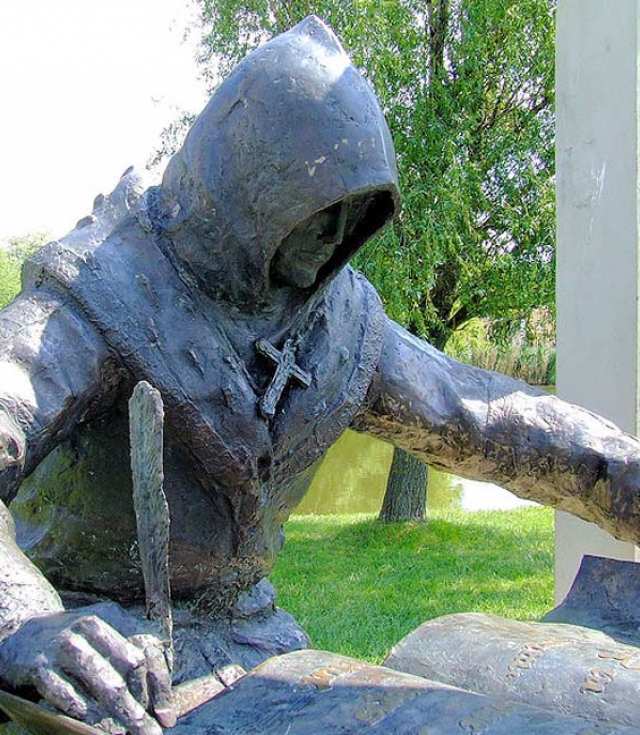
The first written source to call Árpád a descendant of Attila comes from the turn of the 12th and 13th centuries: the chronicle called Gesta Hungarorum by the chronicler referred to in Hungarian historiographic tradition as Anonymus. This Anonymous Scribe possibly took a page out of the tradition of chronicle writing, but even his text doesn’t hide the fact that the goal of describing Árpád as Attila’s descendant was to prove Árpád’s right to conquer and keep the Carpathian basin – in accordance with the medieval interpretation of the law. However, Anonymus doesn’t call the Hun people the ancestors of the Magyars, whereas he mentions the traditional belief of contemporary Seklers to consider themselves the descendants of the Huns.
However, there are other sources that suggest that the ancestors of the Árpád dynasty – that is, the tribal aristocracy of the Magyars – had considered themselves the descendants of the Huns at a much earlier time. One of these alleged proofs was the sword gifted to Bavarian duke Otto of Nordheim by the widow of Hungarian king Andrew I, as this sword is described by Lampert of Hersfeld, a benedictine chronicler from Thüringen around 1077 as Attila’s sword. (Jordanes, a 6th century chronicler recorded a Hunnic myth that describes how Attila’s sword had originally been found lying around in the steppe by a young herdsman who offered it to Attila and the chieftain attributed his transcendent world-conquering mission to this weapon.) The ornamental sword is kept in Vienna today and it has indeed been identifyed by archeologists as the sword of a Magyar high king from the time of the Magyars’ arrival in the Carpathian basin. This fact, however, doesn’t mean that it could not have been considered a proof of Árpád being Attila ’s descendant, but there is no actual proof for this. Maybe it was only the German chronicler who connected the lavish gift with the Attila story for reasons of his own.
Similar suspicions are arising concerning the letters sent by Duchess Sophia, the younger sister of Hungarian king Géza II to her brother from Admont between 1146-48, addressing him repeatedly as ’the victorious king of the Huns’. However, this form of address might have originated just as well from the German-speaking monk who actually penned the letters, since in German contexts in the med-12th century it was a completely widespread notion that the Magyars and the Huns are actually the same.
At this point, the question remains undecided, but the majority of historians these days says that the kings of the Árpád dynasty doubtlessly considered themselves the descendants of Attila, but this tradition can only be seen in the later period of the dynasty. It is considered probable that the idea was taken from German-speaking lands to Hungarian chroniclers and courtiers, as in German sources the Magyars and the Huns are sporadically equated with one another as early as the 10th century, while by the 12th century this had become the dominant interpretation.


Common past: knowledge to dispel historical misconceptions – supporting the work of Slovak and Hungarian history teachers through print and online publications, professional conferences. A project of the Association of History Teachers and the Hungarian-language newspaper of the Denník N news portal.
Funded by the European Union. The information and statements contained herein are those of the author(s) and do not necessarily reflect the official views of the European Union or the Tempus Public Foundation. Neither the European Union nor the funding authority can be held responsible for them.