

For centuries, the name Erzsébet Báthory has been associated with the legend of the “bloody countess” – but how much of this gruesome reputation is true? Tünde Lengyel explores the birth of the myth, its historical distortions, and the radically different interpretations in Slovak and Hungarian public opinion, while questioning whether one of history’s most notorious women was guilty—or merely the victim of a political game?
As preliminary reading, we recommend Gábor Várkonyi’s article on the story of Erzsébet Báthory.
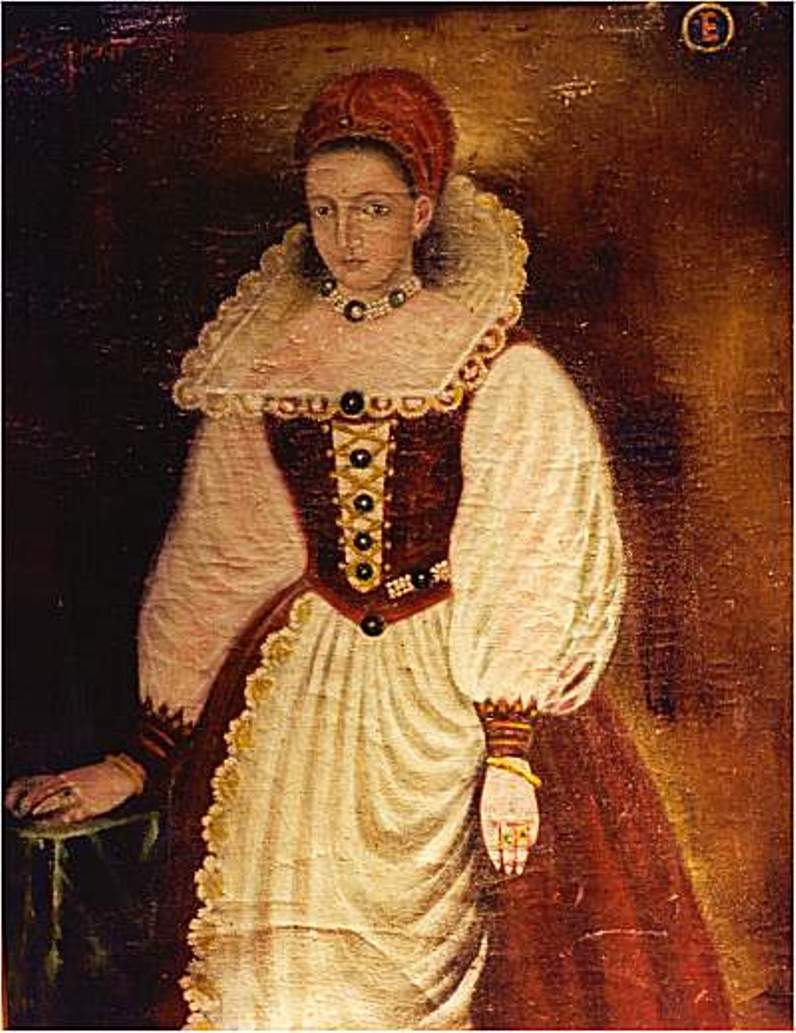
Erzsébet Báthory went down in history, but mainly in the public consciousness, as the most notorious woman in the world. Lucrezia Borgia, Catherine de’ Medici, and even Mary Tudor (better known as “Bloody Mary”) pale in comparison to her. Although these ladies also claimed numerous “victims,” none of them can compete with Erzsébet, who allegedly executed 300, 650, or even thousands of virgins with her own hands, using their blood for rejuvenating and beautifying treatments. The Guinness Book of World Records has awarded Erzsébet Báthory the dubious and not particularly flattering title of “the world’s bloodiest woman.”
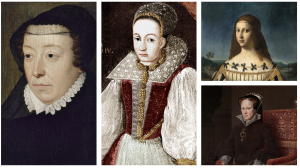
The portraits of Catherine de’ Medici, Erzsébet Báthory, Lucrezia Borgia, and Mary Tudor
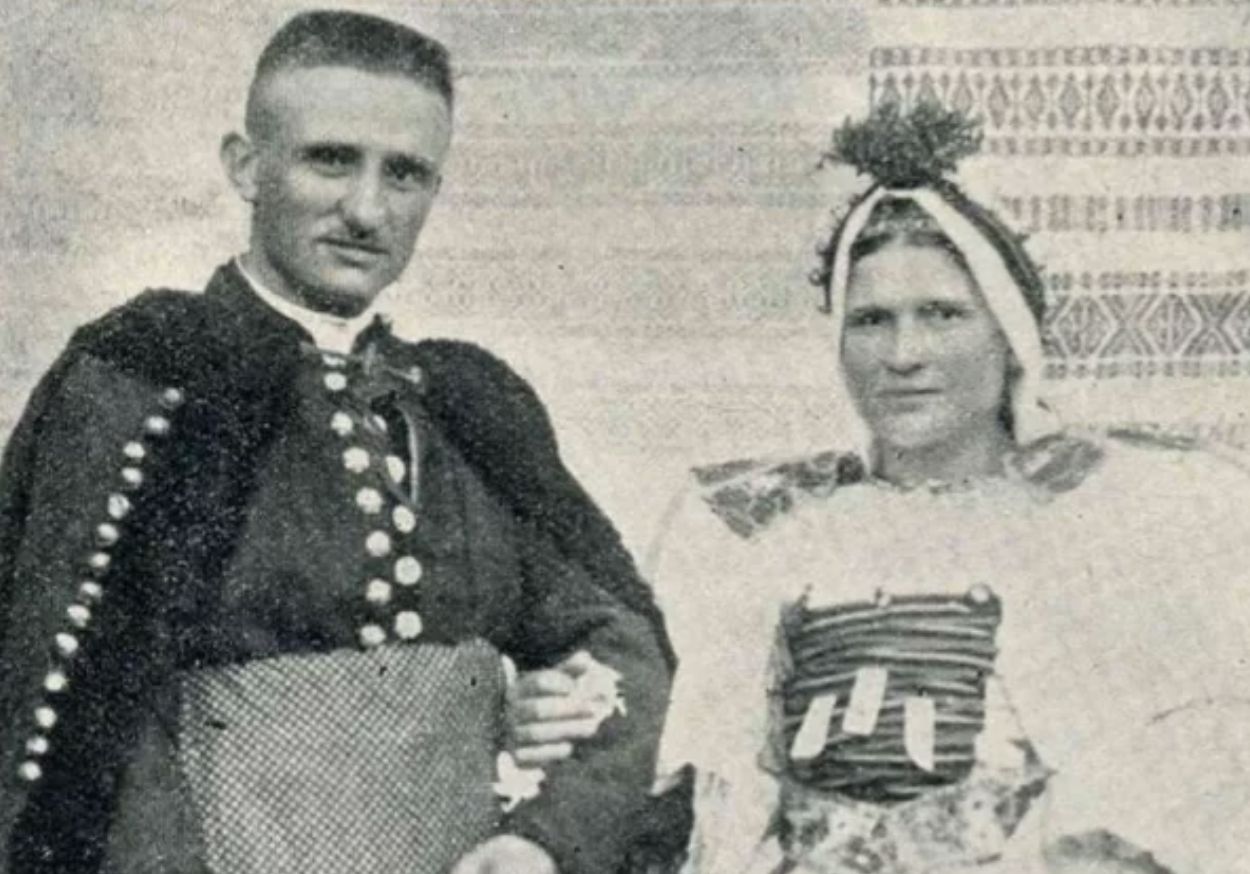
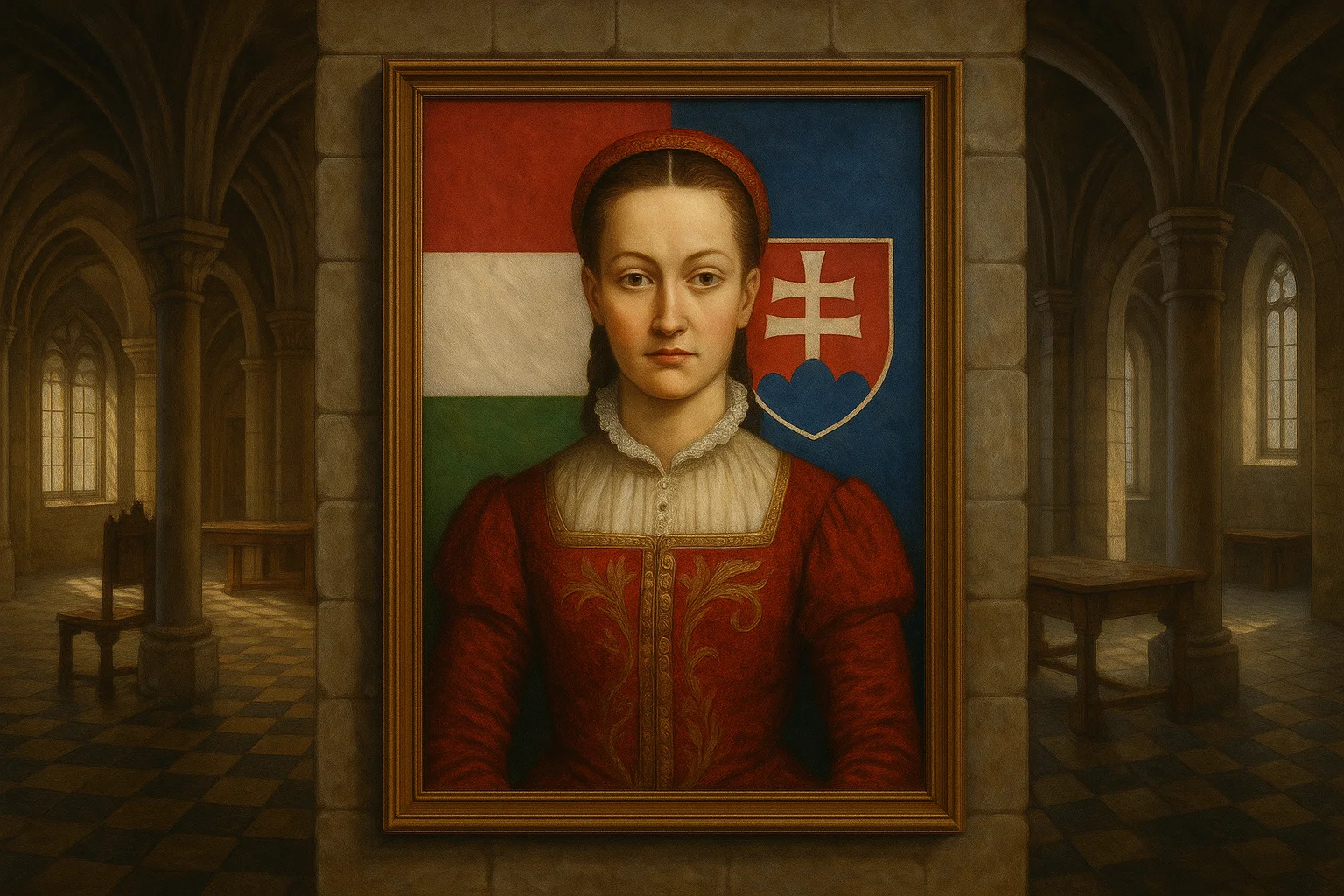
In a few years, the Báthory legend will celebrate its 300th “birthday.” Since the publication of László Turóczi’s Ungaria suis cum regibus data in 1729, countless works have been written, some more serious than others, with more or less dubious conclusions. Countless expert “Báthoryologists” are still working diligently to this day to divide public opinion. It is indisputable that the lighter genre, primarily novels, films, especially pornographic or horror adaptations, have attracted much more interest than serious studies based on research. As a result, it is natural that information born of a writer’s imagination is more likely to remain in the public consciousness than that discovered by a historian through long and meticulous research. Elizabeth Báthory lived her life in a kingdom that is now several countries. The Danube, which forms the border between Hungary and Slovakia, seems to separate not only the countries, but also public opinion. On one side, the lady is considered guilty, on the other, she is considered innocent…
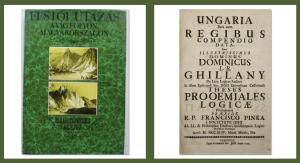
The books by László Túróczi and Alajos Mednyánszky
But first, let’s talk about the diametrically opposed opinions of historians. Nineteenth-century literature began to take a more serious look at Erzsébet Báthory’s “trial”—although “trial” is not the correct term, because there never was one, only a large-scale investigation. Alajos Mednyánszky’s travel bookPicturesque Journey in the Váh Valley was first published in 1826 with the legend invented by Turóczi: when the clumsy servant was combing her mistress’s hair, she was slapped so hard that her nose started bleeding. This dripped onto the mistress’s skin, which was immediately rejuvenated… And this is how the legend of bathing in blood was born. It should be added that Mátyás Bél also played a significant role in spreading the story, because he repeated Turóczi’s words in his “Notitia“. It is difficult to determine which book Mednyánszky and many other later writers used as their source.
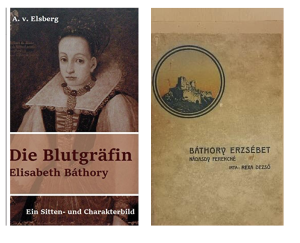
The books of Elsberg and Dezső Rexa
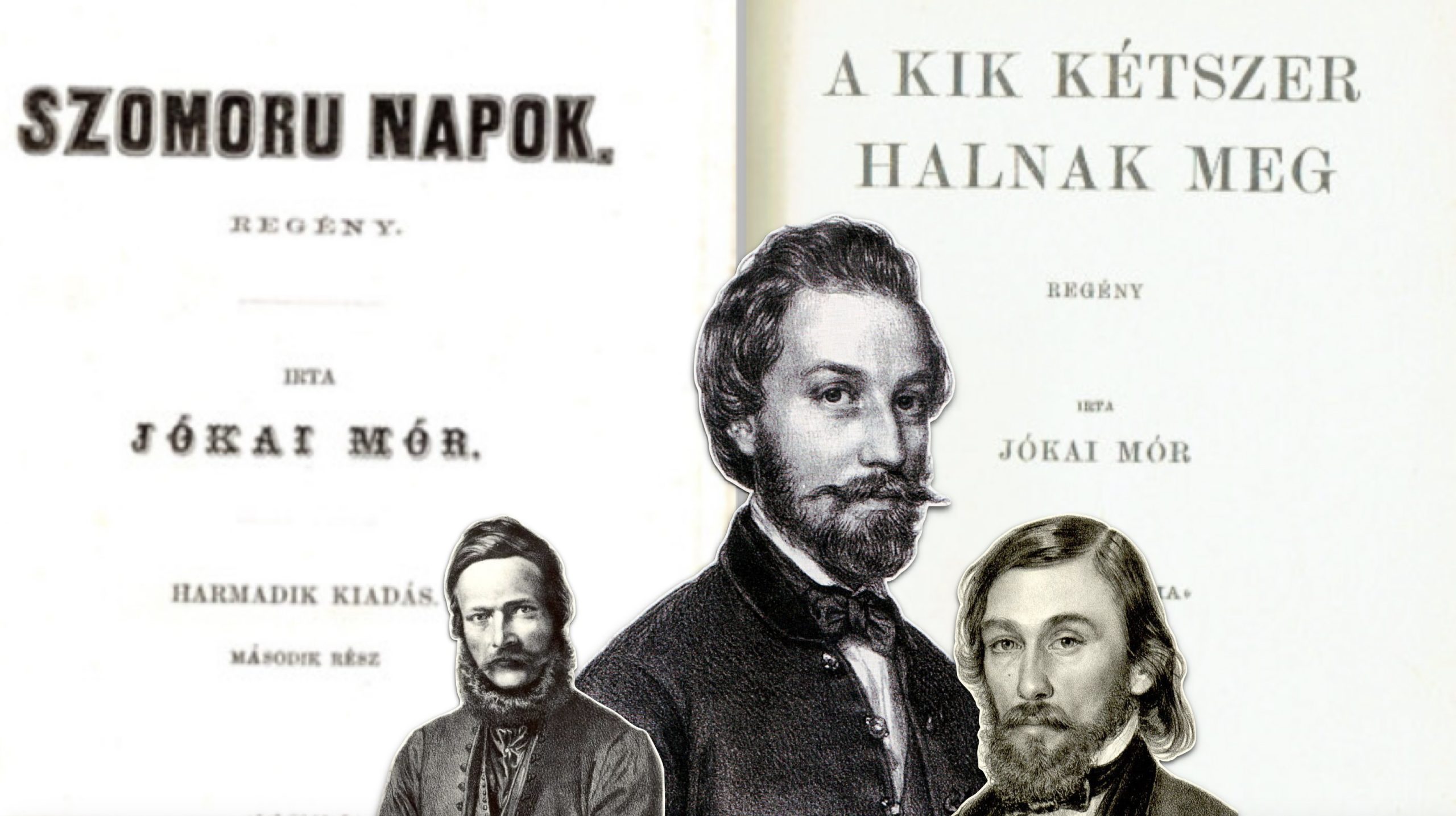
Towards the end of the 19th century, interest in the bloody legend and its perpetrator was revived. In 1880, František Sasinek published the text of the interrogations in the local history journal Slovenský letopis, and a year later, Adolf Peter Záturecký published an article in a popular magazine, further spreading the horror story. In the last decade of the century, R. A. von Elsberg’s book Blutgräfin introduced the world to Erzsébet Báthory, and then Mihály Varga‘s Öldöklő angyal (The Angel of Death) thrilled readers. Bertalan Reviczky published the story in Slovak and German in 1900 and in Hungarian translation in 1903. The next, and arguably the most influential work in spreading the horror story, was published in 1908 by Dezső Rexa, entitled Báthory Erzsébet, Nádasdy Ferencné. In his opinion, the lady was a sadistic psychopath, and he believed that if this had been diagnosed earlier, sadism would today be called bravado. A few years later, Sándor Payr published a more comprehensive study entitled Magyari István és Báthory Erzsébet. After that, no other important or extensive work of scientific merit was published for a long time, except for Géza Supka’s Az átkozott asszony bűnügye (The Crime of the Cursed Woman, Erzsébet Báthory, wife of Ferenc Nádasdy), published in 1941.
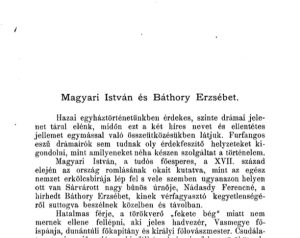
The excerpt from Sándor Payr’s article
In 1932, the editor of the Slovak Agrarian Party’s newspaper, Slovenská politika, published a serialized novel by Jožo Nižnánsky entitled Čachtická pani (The Lady of Čachtice). Given the great success of this readable, exciting novel, spiced with love and a small dose of horror, it was not long before it was published in book form. To date, including translations, more than two million copies have been sold. This represents a considerable readership, which naturally takes the events described in the novel as historical fact, since the characters were real people who once existed. What is more, the book even includes the transcripts of the interrogations at the end. Nevertheless, it must be said that this is an outstanding work in its genre.
No one researched the historical background of Nižnánsky’s story in Slovakia until 1981, when Jozef Kočiš, director of the Biccse archives, published a relatively short book entitled Alžbeta Báthoryová a palatín Thurzo (Erzsébet Báthory and palatine Thurzó). It cannot be denied that the author was well acquainted with the material preserved in the Biccse archives. However, this is only a fraction of the relevant documents, and Kočiš worked with a very narrow perspective and without historical analysis. Sometimes, when he could not find a source for a particular statement, he simply invented one. A good example of this is the letter from Szaniszló Thurzó, in which he informed the palatine of Elizabeth’s death. Kočiš inserted a sentence into the translation of the text in an attempt to prove that the bloodshed was not only common knowledge, but that the “perpetrator” himself regretted it… No one noticed the error for a long time, even though a photocopy of the letter can be seen on the opposite page! And this is not the only case. Apart from this, the book has been published in several editions, partly in a revised version, in which the author refuted the opinions of critics or rejected the work of other historians.
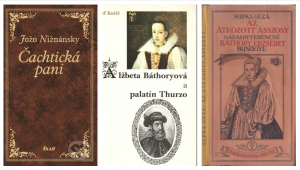
Books by Nižnánsky, Kočiš, and Supka
Shortly before the publication of Kočiš’s book, a cartoon was released in cinemas and then on television, Viktor Kubal ‘s lyrical and fairy-tale interpretation entitled The Bloody Lady(1980). In this terrifying tragedy, combined with light comic elements, Elizabeth Báthory gives her heart as a token of her love to the man who nursed her during her illness and saved her life. However, the empty space in her heart was filled with coldness and hatred, and she began to feed on the suffering of others. The work is still very popular in Slovakia today.
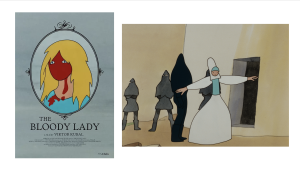
Viktor Kubal – The Bloody Lady (1980)
In the 1980s, Hungarian historians also began to take an interest in the story of the lady of Csejte Castle. László Nagy in his work entitled The Disreputable Báthory Family (1984), shed light on the rumors surrounding the members of the Báthory family and, among other things, judged the image of Elizabeth to be false and defamatory. Later studies proved that much of the slander against the Báthory family originated from the court of Gábor Bethlen. Katalin Péter in her The Lady of Csejte: Erzsébet Báthory (1985) attempted to approach the subject within a broader historical context, raising many interesting and noteworthy ideas and questions. Her subjective statements are debatable—for example, was Erzsébet beautiful? The author did not think so, but perhaps Nádasdy did…
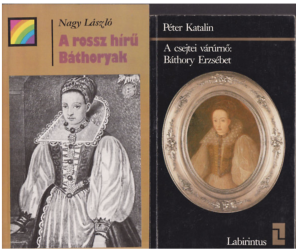
The books by László Nagy and Katalin Péter
Katalin Péter, on the other hand, made a serious mistake: her work is characterized by a presumption of guilt, that is, she started from the premise that Mrs Nádasdy was a mass murderer. She subjected her research to this principle and tried to substantiate it, while managing to dispel a number of misconceptions.
We talked a lot with Katalin Péter. She had extremely inspiring ideas and was able to ask questions that no one else had thought of. When she read the book I wrote with Gábor Várkonyi, I expected her to reject it critically, but in fact she reacted favorably. She did have questions, and she admitted that she looked at the case from a different perspective and was not familiar with many of the sources. Even if she did not agree with everything, she found our version acceptable.
At the same time as Katalin Péter’s book, József Antall and Károly Kapronczay published their work Tűkkel szurkálta (Pierced Her with Needles), in which they also established the psychological profile of Elizabeth Báthory. However highly we may regard the work of these two scholars, it is unacceptable for them to make statements that should be made by a medical doctor, or more precisely, a psychiatrist. Not to mention the rather uncertain value of the sources for establishing a psychological diagnosis. Nevertheless, the study became very popular, and its findings were, unfortunately, treated as fact.
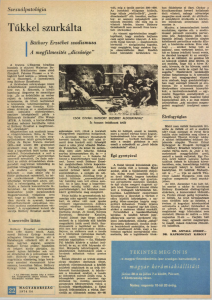
The article by József Antall and Károly Kapronczay
Although István Hetyéssy had already challenged the accusations against Erzsébet Báthory in 1969, his work ultimately remained in manuscript form after several rejections. Judge Irma Szádeczky-Kardoss was more successful, thoroughly examining the case and pointing out a whole series of incomprehensible legal errors. After thorough preparatory work, her book Báthory Erzsébet igazsága (The Truth Of Erzsébet Báthory) was published in 1993, painting a radically different picture of the Báthory case: she saw the events as a showcase trial. Her thorough research revealed not only the legal aspects, but also the underlying threads – the contradictions between certain actors and the possibility of false testimony resulting from this, the intervention and interests of the court and the chamber, the role of publicity in shaping public opinion, and many other small details, which, when taken together, reveal a complex picture that seriously refutes, or at least questions, the well-known and widely accepted claims about the lady’s guilt.
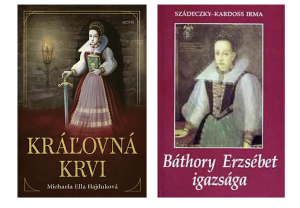
The books by Michaela Ella Hajduková and Irma Szádeczky-Kardoss
Irma Szádeczky-Kardoss’s work received a cold reception in Slovakia. In the new edition of his book, Jozef Kočiš spoke dismissively about it, although he did not provide any evidence to refute it. I suppose that, due to a lack of language skills, not many people read the judge’s book, only a more detailed summary by the author of this article, to which the Slovak public reacted quite nervously. Incidentally, similar reactions appeared when historians concluded that romantic ballads and folk tales do not paint a very objective picture of the Slovak national hero Juraj Jánošík, because Jánošík was in fact a common criminal, and although his death penalty was particularly cruel, it was still within the framework of the laws of the time. The destroyers of legends should not expect to be very popular! Especially when competition such as Andrej Štiavnický emerges. The novels of this electrician-turned-writer, who publishes under a pseudonym, in which the author (who allegedly researched the subject for 30 years!) pulls out all the stops, have been published in perhaps eight sequels and estimate the number of Báthory’s victims at tens of thousands. Despite the literary and content-related worthlessness of the boring and childish story, whose ever newer sequels have been published since 2001, it has won over many readers. The author himself increased the number of copies sold by forcing his writings on visitors to Csejte Castle after giving them a very vivid, “blood-spattered” presentation.
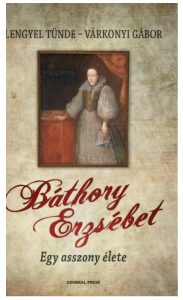
The book by Tünde Lengyel and Gábor Várkonyi
Perhaps this also contributed to the fact that when Slovak director Juraj Jakubisko‘s historical film was released in 2008, which, contrary to the accepted public opinion in Slovakia, presented Erzsébet Báthory as an emancipated, educated lady who was involved in healing the sick and increasing her estates, not only the director but also the professional advisors (Gábor Várkonyi and Tünde Lengyel) were subjected to harsh criticism. The outraged critics, who wrote articles imbued with “national consciousness,” were unable to come up with arguments that would refute Jakubisko’s artistic creation with facts, so they contented themselves with meaningless tirades and ridiculous accusations. However, the film was well received by most of the audience and sparked many people’s interest in the subject. This gave us the idea to use the results of our research and summarize what we know about Erzsébet Báthory. In 2009, it was published in Slovak and Czech, and in 2010, it was published in Hungarian under the title Báthory Erzsébet – Egy asszony élete (Erzsébet Báthory – The Life of a Woman). The professional community received it relatively positively, but the opinion of the wider reading public was even more interesting. Surprisingly, there were many positive reviews on the websites of major bookstores. Of course, there were still some negative reviews, most of which were written by people who had not read the book – yet they knew better…
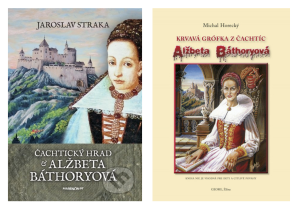
The books by Straka and Horecký
Jakubisko’s film may have had as much influence on public opinion as Jožo Nižnánsky’s book did at the time. Nevertheless, several authors believed that the story of Báthory could be exploited indefinitely, and although they did not conduct any research, they still “discovered” many things. Michal Horecký (2016) attempted to “uncover the past” in the form of a novel, but instead produced a horror story of modest value. Surprisingly, however, Jaroslav Straka’s work on the castle of Csejte and its mistress (2016) is boldly plagiarized, stealing facts from other authors without reference and compressing them into a chaotic medley with his own ideas, accompanied by numerous content and logical errors. The book is only worth mentioning because the author is a lawyer and a university professor adorned with titles, who should therefore be familiar with the rules of academic research and publication.
However, there has been a shift in fiction. It is perhaps characteristic that female writers are more willing to accept the fact that Erzsébet Báthory was the target of a smear campaign than male writers. Ľuba Lesná condensed Erzsébet’s account of her life’s love into a short story (2017), and Michaela Ella Hajduková also took a stand for the countess’s innocence in her successful novel published in 2022.
Czech literature deserves a separate study, as even works written with scientific rigour unanimously declare Erzsébet Báthory guilty. It is a mystery why Czech readers are so attracted to the figure of the cruel mistress. I have read a lot on this subject, but Czech literature surpasses everything else in its horrific descriptions. English-language literature also eagerly spreads Erzsébet Báthory’s bad reputation, and there is even an opera by composer Dennis Bathory, who claims to be a direct descendant of the Báthory family, which died out in the early 17th century.
In conclusion—although much more could be written about how the story of the “bloody countess” has inspired people around the world—I would like to return to the audience most affected, the Slovak and Hungarian readers. In my experience, in recent years in Hungary, the story of Erzsébet Báthory murdering virgin girls has entered the realm of legend, whether in literature, the media, or museums. An exception to this is Péter Hahner’s short but superficial and contradictory article in Legújabb 100 történelmi tévhit (The 100 Latest Historical Misconceptions) published in 2020.
In Slovakia, however, there is a serious battle between the two camps. Even today, we hear ridiculous claims that “the Hungarian countess murdered Slovak serf girls” because Hungarians have always hated Slovaks… We must fight hard against such arguments. But there is also reason for optimism: in addition to the aforementioned fiction, the newly renovated Draskovits Castle Museum in Csejte now presents the countess’s true story to visitors, with ample reference to the bloody legend. This approach is entirely legitimate – after all, without Erzsébet Báthory, Csejte would be just an ordinary village…
Common past: knowledge to dispel historical misconceptions – supporting the work of Slovak and Hungarian history teachers through print and online publications, professional conferences. A project of the Association of History Teachers and the Hungarian-language newspaper of the Denník N news portal.
Funded by the European Union. The information and statements contained herein are those of the author(s) and do not necessarily reflect the official views of the European Union or the Tempus Public Foundation. Neither the European Union nor the funding authority can be held responsible for them.