


Claim:
Only the so-called “democratic opposition” stood up against the Kádár regime in the 1980s.
Rebuttal:
Although the ’democratic opposition’ was the most visible force opposing the Kádár regime, there were other opposition groups as well, and other forms of resistance also occurred.
In detail:
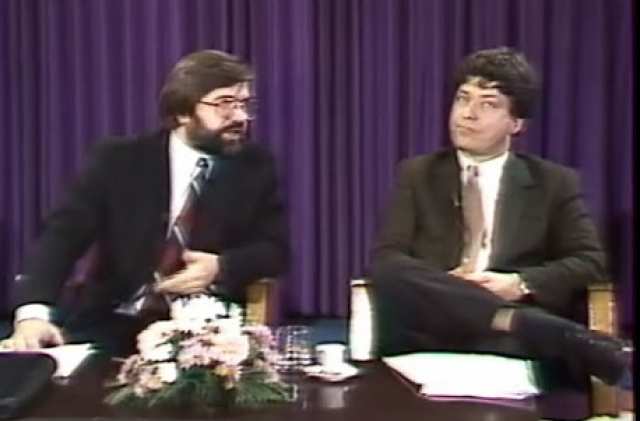
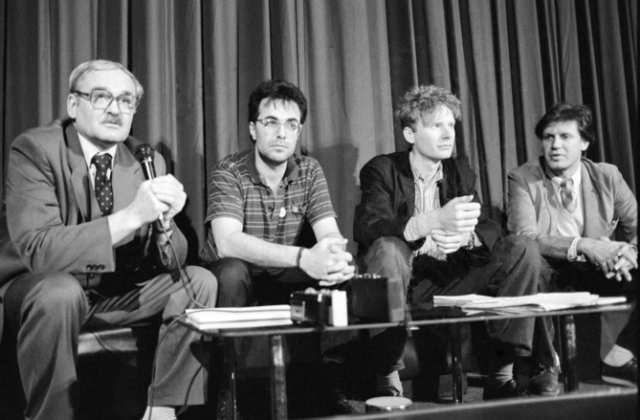
Undoubtedly, it was the group calling itself ’democratic opposition’ that stood up to the Kádár regime in the most spectacular, daring, and well-documented way. It was largely from this group that the social-liberal party called the Alliance of Free Democrats (SZDSZ) was formed in November 1988, which enjoyed considerable support in the press and also internationally due to its past. Moreover, around 1989-1990, they had the most unified and detailed scenario for the transition, which was also understandable to Western governments and followed the Western model. They published their ideas in programs, such as the Social Contract in 1987 and There is a Way Out in 1988. By 1989, they had been around for more than a decade, yet they were still relatively unknown. They published in ’samizdat’, i.e., illegally, secretly, using simple reproduction techniques, and these publications exposed the injustices of the system and hushed-up events, and outlined alternative political ideas. In addition, they held lectures on taboo topics in apartments, which they called flying universities. Related to this circle was the Fund for the Support of the Poor (SZETA), a civil organization founded in 1979, also illegal, organized by Ottília Solt, which drew attention to the fact that the socialist system had not, in fact, solved the problem of poverty.
Their pamphlets were published in a few hundred or, in the best case, a few thousand copies, the largest of which was Beszélő, edited by János Kis, Miklós Haraszti, Ferenc Kőszeg, and their colleagues. (Its issues have been digitized and are available here.) Using their personal networks, they distributed these in their own homes – the most famous location was the apartment of the son of László Rajk, who was executed in 1949, known as the “Rajk boutique.” Similar groups were formed in other countries of the Soviet bloc and even gained greater international publicity, such as the Czechoslovak Charta ’77 movement, which preceded the organization of the Hungarian democratic opposition. However, even their influence and social recognition were nowhere near comparable to the Polish Solidarity movement, which had ten million members by 1981 and was able to paralyze the government by organizing strikes and creating a genuine counter-society, which the government was only able to break by introducing martial law. Western governments also embraced these groups, citing the third basket of the Helsinki Accords (1975) on the protection of human rights. (A digital database has recently been created on cultural resistance in Eastern Europe.)
Members of the democratic opposition took risks and faced retaliation, and the state security services naturally monitored their activities, occasionally taking their members in for questioning, confiscating illegal publications, and placing several of them, including Miklós Haraszti—who was also brought before the courts in the 1970s for his book Darabbér—under police surveillance. Sociologist Gábor Demszky, the main organizer of the reproduction of samizdat publications, was beaten up by police officers on the street in September 1983 and then also brought to court on charges of violence against the authorities. In 1985, when the new election law allowing citizens to nominate their own candidates at nomination meetings was first applied, the Ministry of the Interior organized the exclusion of opposition activists from these meetings. However, the mass imprisonment or blatantly violent harassment of the opposition would obviously have damaged the regime’s international reputation. By the 1980s, due to the “double dependency” that had developed as a result of Hungary’s international indebtedness and credit constraints, the expectations of Western creditor states in this regard also had to be taken into account. Moreover, the Kádár leadership saw, quite realistically, that the ’democratic opposition’ was a small group of intellectuals who did not have broad social connections, unlike the Polish Solidarity movement had with the working class.
By the mid-1980s, another influential group of the Kádár opposition had formed, the so-called völkisch opposition, whose core was also made up of intellectuals, mainly writers. Its most influential figure until his death in 1983 was Gyula Illyés, followed by Sándor Csoóri and István Csurka. This circle did not go into “opposition”; on the contrary, they expressed their aversion to what they saw as spurious and even self-accentuating behaviour of the democratic opposition when they ’had themselves bludgeoned by police’, for example on March 15. The völkisch opposition, in turn, did not establish samizdat publications, but published in mainstream newspapers and magazines, had their books published by state publishing houses, and had their plays performed. At the same time, their efforts to launch a forum expressing their own views were blocked by the authorities for a decade and a half, and because of certain statements they made—such as Csoóri’s foreword to a volume published abroad in 1983, or Csurka’s in 1986—they were also ’sentenced to silence’, meaning that their new writings could not be published for a certain period of time, while Gáspár Nagy had to resign from his position in the Writers’ Association because of a poem commemorating Imre Nagy in 1956, and the issue of the magazine Új Forrás, where the poem had been published, was pulped. The popular opposition highlighted other issues and confronted the authorities with them: moral issues (“extortion,” “petty bourgeoisie”), the dangers of population decline, and the situation of Hungarian minorities in neighbouring countries.
In 1985, at the Monor meeting—which was also attended by members of the democratic opposition and even Kádár’s technocratic intelligentsia—they appeared on the opposition scene, and in 1987, in Lakitelek, they formally established their movement, the Hungarian Democratic Forum, which even then balanced on the edge of legality: they maintained good relations with Imre Pozsgay, the leader of the völkisch wing of the Hungarian Socialist Workers’ Party (MSZMP), who was able to offer the protection of the Patriotic People’s Front, a mass organization of non-party members in socialist Hungary.
Fidesz was also founded within the existing legal framework in the mid-1980s: in 1985 at a meeting of university students’ specialisation clubs in Szarvas.
In addition, there were numerous other small circles of resistance against the system. Admittedly, it would be difficult to call these ’opposition groups’, as they did not come up with a comprehensive political program. Some of them were organized on a religious basis, such as the Bokor community led by György Bulányi, several members of which were imprisoned for refusing compulsory military service, or the community of Gábor Iványi, a Methodist pastor who was also involved in SZETA and Beszélő. The state security services also closely observed and harrassed priests and pastors who were actively involved in community building, as well as dinner clubs made up of members of pre-war political formations (Christian Democrats, Smallholders’ Party) as enemies. For example, they kept József Antall and his circle under surveillance.
In the years before the regime change of 1989, a group of reformist economists (Lajos Bokros, Tamás Bauer, György Matolcsy, Márton Tardos) emerged at the Institute for Financial Research and elsewhere, who called for radical economic reform and even the introduction of a market economy.
Common past: knowledge to dispel historical misconceptions – supporting the work of Slovak and Hungarian history teachers through print and online publications, professional conferences. A project of the Association of History Teachers and the Hungarian-language newspaper of the Denník N news portal.
Funded by the European Union. The information and statements contained herein are those of the author(s) and do not necessarily reflect the official views of the European Union or the Tempus Public Foundation. Neither the European Union nor the funding authority can be held responsible for them.