

Claim:
In 1988-89, there was a real danger that the conservative wing of the Hungarian Socialist People’s Party would use the Workers’ Guard to prevent the democratic transition.
Rebuttal:
There is no evidence that anyone wanted to deploy the Workers’ Guard, and from May 1989 onwards, this was not even possible.
In detail:
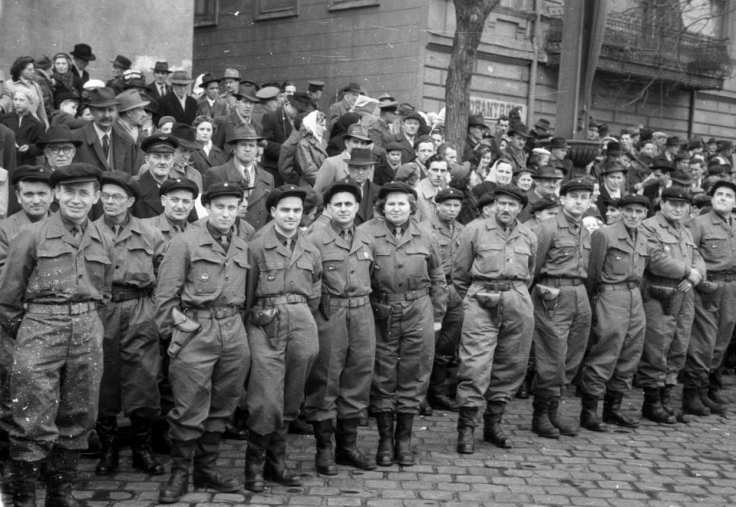
The Workers’ Guard was formed by the Hungarian party leadership after the suppression of the 1956 revolution. It was a party army, which was not unprecedented in the 20th century, and similar formations also operated in other socialist countries. Its precedent within the Hungarian Communist Party was the so-called Rendező Gárda (Organizing Guard), which operated between 1945 and 1950. The creation of this organization, recruited from people loyal to the Party, was justified by the need to “restore order” after the revolution, and its first deployments took place in the spring of 1957, during the consolidation of power: on March 15, their main task was to maintain order and deter dissent, and on May 1, it was to demonstrate support for the government. In the 1960s and 1970s, their numbers reached 40-50,000, most of whom, of course, belonged to the so-called “civilian staff,” who, in addition to their civilian occupations, attended regular training and exercises in their free time. The professional staff, who had this as their profession and job, i.e., the leaders and organizers, numbered a few hundred. The workers’ guards were allowed to carry weapons, and in the early years they kept them with them, but regulations became stricter in the 1960s. “The source of all the trouble is that they get drunk and have weapons in their pockets,” was János Kádár’s summary assessment of the scandals and accidents in 1963. (The public was aware of these, albeit not from the press.) In 1963, decisions were made to reorganize the Workers’ Guard, rejuvenate its membership, screen members on the basis of suitability, and establish a five-year “term of service.” From then on, a growing proportion of non-party members were also accepted into the ranks. Of course, the Workers’ Guard did not only consist of workers, but also included well-known intellectuals, for example.
However, in the three decades following its formation, the Workers’ Guard did not have to defend “workers’ power” with weapons. Of course, they were still trained and drilled, operational plans were drawn up, they made appearances during festive parades, and they cooperated with the armed law enforcement agencies in providing security for major events. In 1968, for example, during the invasion of Czechoslovakia, they were assigned to guard certain buildings, direct traffic, and patrol within the country’s borders. They also established permanent cooperation with flood protection services.
The Workers’ Guard celebrated its 30th anniversary in 1987: “It is no exaggeration to say that, with their characteristic modesty, they commemorated it in a large family circle, so to speak,” noted a commentary in the Party’s official daily, Népszabadság, praising their restraint as a virtue. However, that year, the forced reform—downsizing—of the Workers’ Guard was already being discussed, and in line with the new economic environment, the organization was already performing management and maintenance tasks, such as workers’ guard members guarding part of the Budapest circular railway line as paid overtime.
In 1988, carefully selected Workers’ Guard members in civilian clothing mingled with the demonstrators on March 15, and several hundred were placed on standby, but as before, they were not deployed. A few days before the 30th anniversary of Imre Nagy’s execution, Károly Grósz spoke about the possibility of using “administrative measures” at a national meeting of worker’s guard commanders. (Let us be clear that this did not mean the armed deployment of the workers’ guards, but it did fit in with the tactics of the pro-order communist leaders to maintain a sense of threat with ambiguous, misleading hints and thus restrain the opposition forces. The October 1988 decision of the Defense Committee also called for the establishment of Workers’ Guard standby units, supposedly to cover all eventualities. However, neither then nor later was the maintenance of social order primarily the task of the Workers’ Guard, but rather that of the police. At that time, the Workers’ Guard was involved in the armed guarding of some 560 buildings and other facilities.
At the end of 1988, during the parliamentary budget debate, opposition MP Zoltán Király (for there were already a few opposition MPs at the time) suggested that the Workers’ Guard had “fulfilled its historical mission” and should therefore be disbanded. By then, it was certain that some kind of multiparty system would be established in Hungary, and the newly formed opposition parties also adopted the demand. The contingency plans ordered in October 1988 were not completely forgotten: a draft instruction was prepared in the spring, but it was not finalized. During the protracted negotiations with the opposition parties, it was in the MSZMP’s interest to maintain uncertainty about the party’s intentions, including those relating to the Workers’ Guard.
In May 1989, a decision was made to reorganize the Workers’ Guard once again. A significant change was that the 60,000-strong organization was transferred from the party leadership to the supervision of the Council of Ministers. (The Hungarian People’s Army had a peacetime strength of around 100,000 at the time.) Legally, this meant that it ceased to be a party army, even if the transition was uneven: there was nowhere for them to go from the buildings they shared with the party, and even in the summer they were still guarding party headquarters. However, the reformers of the MSZMP were clearly in the majority in the government, and they did not want the Workers’ Guard to be deployed under any circumstances. The Central Committee’s decision also stated that the Workers’ Guard was “not a tool of political struggle.”
In the summer, the Workers’ Guard was also hit by severe austerity measures – only about 70% of the funds allocated in the budget were received (only 622 million forints instead of 893 million), and at that time, a forced reduction in personnel of about 30% was expected. Nevertheless, summer reports still suggested that morale among county units was good, with participation in various prescribed activities reaching 80-90%. Only the capital reported that it had “remained well below acceptable levels throughout the year.” It is true that since it was in the interest of the county and national leaders of the Workers’ Guard to preserve the organization in some form, they naturally had to present themselves as viable.
The leadership of the Hungarian Socialist Workers’ Party (MSZMP) also had to face the question of what to do with the Workers’ Guard. The issue was even put on the agenda of the National Round Table and discussed by its I/6 committee, which was negotiating the guarantees for a peaceful transition, but the parties’ ideas were irreconcilable. The opposition parties demanded the abolition of the Workers’ Guard, and among their arguments was, of course, that the existence of the Workers’ Guard was percieved as a threat. The leaders of the MSZMP and the government, which now oversaw the Workers’ Guard, were prepared to preserve the organization during the transition, albeit with a different name and self-definition. They envisioned a kind of national militia, for which there were European examples, which would be subordinate to the army and perform disaster relief and law enforcement tasks, even if unarmed.
Since the National Round Table failed to reach agreement on this issue, the SZDSZ and Fidesz launched a referendum campaign challenging certain points of the September 18, 1989 agreement, which included the dissolution of the Workers’ Guard among its demands. On September 29, timed to coincide with Armed Forces Day, when the Workers’ Guard appeared in numerous locations and held demonstrations, protests against the Workers’ Guard were organized in several cities across the country. The national commander of the Workers’ Guard, Sándor Borbély, responded harshly, emphasizing that the Workers’ Guard was “still a unified and effective” organization that was ready to continue “assisting left-wing forces.”
There were indeed fears among the actors of the time regarding the Workers’ Guard, and they had little accurate information, which made them cautious, but on the other hand, it was in the interest of both the MSZMP and the opposition politicians to play on this. The communist leaders wanted to restrain the opposition somewhat, while one of the opposition’s fundamental – and symbolic – demands was the dissolution of the Workers’ Guard. Miklós Németh recalls that even at the MSZMP congress in October 1989, which led to the formation of the MSZP, rumors spread that workers’ guards had surrounded the Congress Palace building. As it turned out, in fact only four Workers’ Guard leaders had appeared at Grósz’s office – as party politicians – to discuss the political situation.
Borbély was dismissed from his post a week later, and the Workers’ Guard was dissolved without legal succession by the Minister of Justice on October 20, 1989. Miklós Németh – presumably overdramatizing the incident – recalls that he delivered the news to the Workers’ Guard in the company of Defense Minister Ferenc Kárpáti with a knot in his stomach and a feeling of anxiety: “On Saturday morning, I had stomach cramps. I didn’t feel this kind of fear at Imre Nagy’s funeral – not even when they tried to put a bulletproof vest on me, talked about threats on my life, and the secretaries said goodbye to me in tears. […] When I wasleaving home at half past nine and my wife asked me if she would see me alive again in the afternoon, I thought to myself: my God, if even Erzsi is talking like this!” On October 22-23, the Hungarian People’s Army took over the weapons and facilities of the Workers’ Guard without any conflict. A little over a month later, in November, the question of the Workers’ Guard was included in the four-question referendum, by then with nothing actually at stake.
Common past: knowledge to dispel historical misconceptions – supporting the work of Slovak and Hungarian history teachers through print and online publications, professional conferences. A project of the Association of History Teachers and the Hungarian-language newspaper of the Denník N news portal.
Funded by the European Union. The information and statements contained herein are those of the author(s) and do not necessarily reflect the official views of the European Union or the Tempus Public Foundation. Neither the European Union nor the funding authority can be held responsible for them.