

Claim:
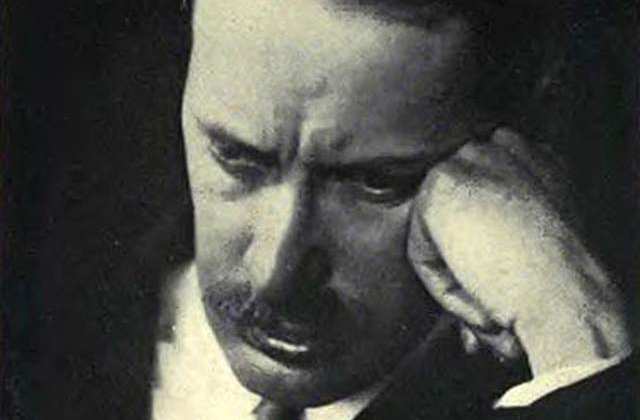
Mihály Károlyi was a traitor
Rebuttal:
During the few months of the Aspern Revolution of the autumn of 1918 Károlyi tried to minimise the losses of Hungary. It is undeniable that the road he took to do this led to utter failure and he could have chosen a better one. This, however, doesn’t mean that Károlyi was a traitor – maximum that he was not cut out to accomplish the task that he had undertaken.
In detail:
The court sentence that declared Károlyi a traitor was passed on 21 February 1923. This court procedure became the basis of the accusations of treason against him to this day. The concept of treason involves that the person is acting consciously to harm their country. Károlyi, however, was doing his best to try and minimise the losses Hungary would suffer as a result of losing the war, in the way he thought best. It is undeniable that he chose the wrong way. His most problematic move was delaying the organising of the armed resistance. However, we don’t know whether this had any momentuous influence on where the borders were eventually drawn. In Upper Silesia, for instance, it was the local German resistance that achieved a referendum, as a result of which the region was divided between Poland and Germany. It is doubtful, however, whether Hungary could have achieved anything similar by resisting, mainly because the military odds were radically different. It was the well-rested Romanian army alongside with Serbian, Czech and French troops against the Hungarians. (Some also try to set the example of the Turkish resistance, but in fact the Turks only turned on their invaders later, after the peace treaty of 1920, and they were in a much better military and geographic situation than the Hungarians in 1918.) The Hungarian Red Army was only set up by the bolshevik revolution after the pacifist public opinion subsided, but even they could not achieve a lasting victory. The lines of military occupation didn’t become the final borders anyway – after all, the whole of the Hungarian Plain was under occupation, including important towns like Szeged and even Pécs, yet they remained in Hungary after Trianon, and the occupiers left. All in all, we can’t tell how a more powerful military resistance would have influenced the final borders, yet the responsibility for hesitating and procrastinating does rest with Károlyi. This, however, doesn’t mean he was a traitor, merely that he was unsuitable to carry out the Herculean task that he had undertaken.
The question whether Mihály Károlyi was a traitor was discussed in greater detail in a previous article on the website.
Common past: knowledge to dispel historical misconceptions – supporting the work of Slovak and Hungarian history teachers through print and online publications, professional conferences. A project of the Association of History Teachers and the Hungarian-language newspaper of the Denník N news portal.
Funded by the European Union. The information and statements contained herein are those of the author(s) and do not necessarily reflect the official views of the European Union or the Tempus Public Foundation. Neither the European Union nor the funding authority can be held responsible for them.