

Claim:
Hungary was liberated by the Soviet army.
Rebuttal:
The claim can be said as an opinion but in a political sense it’s false, since the Soviet army didn’t create political freedom in the country.
In detail:
Obviously many people perceived what happened as liberation, especially if they were meant to perish in the former regime. In a political sense, however, we could only call it liberation if the aim of the Soviet army in Hungary had been the restoration of political freedom. They were very far from this. As Sándor Márai succinctly put it, an army that has no freedom itself is incapable of liberating anyone else. The aim of the Soviet leaders was not to liberate Europe but to further their own political ambitions as a great power. This meant imposing a communist regime on the occupied territory on the long run. [1] The Soviet troops did indeed rid Hungary of the rule of the Arrow Cross party and the Nazis, but they were unable to liberate it. Liberation only occured when 44 years later the system they had been holding in power finally collapsed.
[1] For more on this question, see Krisztián Ungváry’s paper on the questions of the Sovietisation of Hungary in Romsics Ignác: Mítoszok, legendák, tévhitek a 20. századi magyar történelemről. Budapest, 2002 Osiris
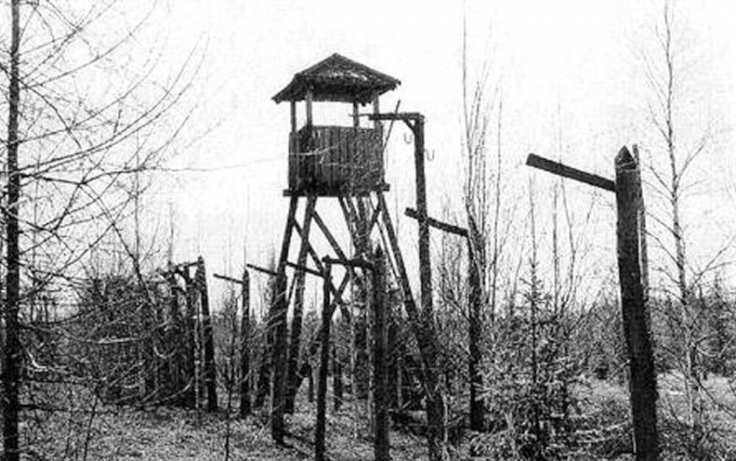
Temporary camp of people being transported to ’malenkiy robot’ forced labour, Pilisvörösvár, Hungary
Common past: knowledge to dispel historical misconceptions – supporting the work of Slovak and Hungarian history teachers through print and online publications, professional conferences. A project of the Association of History Teachers and the Hungarian-language newspaper of the Denník N news portal.
Funded by the European Union. The information and statements contained herein are those of the author(s) and do not necessarily reflect the official views of the European Union or the Tempus Public Foundation. Neither the European Union nor the funding authority can be held responsible for them.