

Claim:
The ’Codex of Isfahan’ proves that the Magyar and the Hun language were identical
Rebuttal:
The ’Codex of Isfahan’ has never been published and the monastery where it is supposed to be kept doesn’t even exist.
In detail:
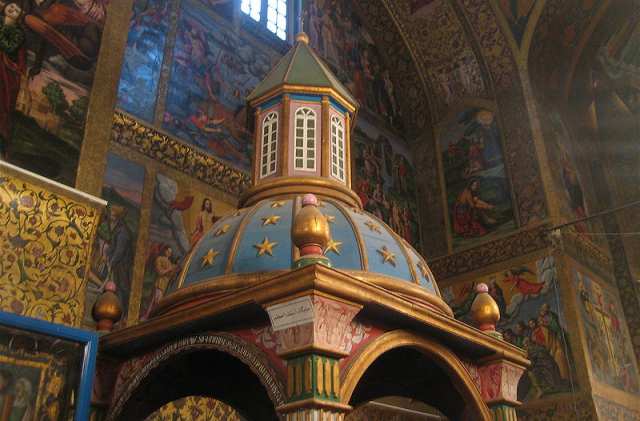
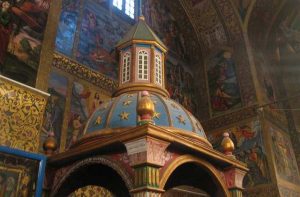
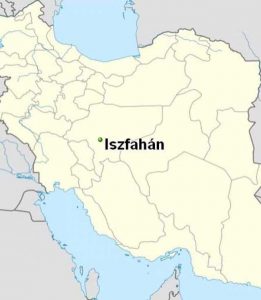
According to a colouring book for children, the Codex of Isfahan, Iran is kept at an Armenian monastery by the name of Holy Cross, and together with the mysterious Cretan Codex it is the main proof of the close relatedness, or, indeed, identicalness, of the Magyar and Hun language. These ’significant language relics’, according to this description, are Armenian-Hun glossaries created around 500 and 700 AD. Many, at least half, of the Hun words in the alleged glossary sounds almost identical to the corresponding modern Hungarian word, such as ‘tengir’ vs Hungarian ‘tenger’ (sea), ‘szele’ vs ‘szél’ (edge/hem), ‘sziki’ (dry) vs ‘szik’ (dryland), ‘lüthü’ vs ‘lejtő’ (slope), ‘soprun’ vs ‘Sopron’, (underhill, Sopron being a town at the foot of the Alps in Western Hungary today), ‘kapu’ vs ‘kapu’ (gate), etc. According to reports about this codex, apart from vocabulary similarities, it testifies to similarities of the grammatical system as well, such as the plural suffix, the accusative suffix and the suffixes for belonging.
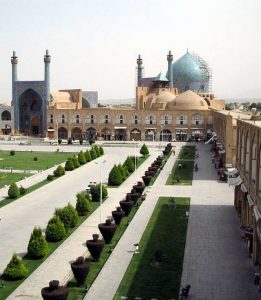
If all of this were true, that would be sensational indeed, since we have very limited knowledge of the Hun language. Apparently there is an online publication, a ’Hun-Magyar Etymological Dictionary’ launched in 2007, which, however, has nothing whatsoever to do with the Huns – it tries to correspond Hungarian and Sumerian words. (More about it in our entry on Sumerian-Hungarian relatedness.) The original codices, however, nobody has been able to see as yet, nor have there been any pictures of them published or suitable descriptions available. And there can’t actually be: there are Armenians living in and around Isfahan, but there is no Armenian monastery in the city named after the Holy Cross and actually there is no proof at all to underpin the claim that there is indeed a ’Hun language relic’ by the name of ’Codex of Isfahan’. A detailed analysis of the allegations can be found in a paper entitled ’Why is the Hungarian Academy of Science silent?’ and another paper by a scholar of Armenian studies.
Common past: knowledge to dispel historical misconceptions – supporting the work of Slovak and Hungarian history teachers through print and online publications, professional conferences. A project of the Association of History Teachers and the Hungarian-language newspaper of the Denník N news portal.
Funded by the European Union. The information and statements contained herein are those of the author(s) and do not necessarily reflect the official views of the European Union or the Tempus Public Foundation. Neither the European Union nor the funding authority can be held responsible for them.