


Claim:
The medieval Hungarian chronicles kept alive the tradition of the Huns=Magyars identification.
Rebuttal:
The first Hungarian chronicler to write about the alleged Hunnic origin of the Hungarians was Simon Kézai. Before him no such ’tradition’ had existed, he created it based on chronicles and legends elsewhere in Europe.
In detail:
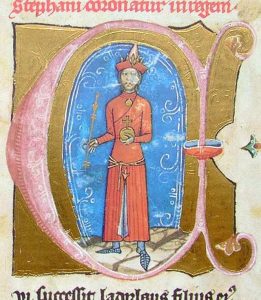
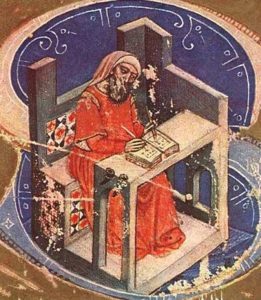
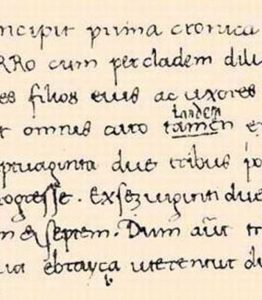
Simon Kézai was a priest and courtier in the court of king Ladislas IV of Hungary. In earlier Hungarian chronicles we find no mention of the Magyars being the descendants of the Huns. Anonymus, an earlier scribe and chronicler only claimed that the kings of the Árpád dynasty were the descendants of Attila himself, while it was Kézai who widened the notion to include the entire nobility, claiming that the Hun people were the ancestors of the Magyars. All the Hungarian chronicles written after Kézai start the history of the Magyars with the Huns.
Kézai traces the origin of the Magyars starting from one of the 3 sons of Noah, Japheth, then through his grandson, the giant Nimrod, considered the builder of the tower of Babel and through the Scythians all the way to the Huns, who gave rise to the Magyars. Kézai writes about the history of the Huns in great detail, including their heroic ’landtaking’, followed by the story of the ’second landtaking’, the arrival of the Magyars in the Carpathian basin. It is also Kézai who recorded the myth of the magic deer – probably the only component of the narrative actually taken from contemporary Hungarian folk tradition. Kézai supplied the Hun characters with Magyar names and liberally transferred later historic events into Attila’s times. Kézai relied on multiple sources when constructing the history of the Huns, including reports on the Huns by contemporaries, Hun-themed legends from German, French and Italian-speaking lands and also the folk myths and legends surrounding certain ruins, hills and objects in his native Transdanubian region.
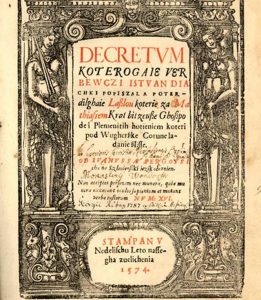
One goals of the narrative is to explain the differences between certain groups of Hungarian who belong to the same nation, while also emphasising the equality among the nobles. Kézai claims that originally all the Huns (which is to say Magyars, in his version) were equal, but those who disobeyed the call of war duty were either enslaved or killed. In Kézai’s model of an ideal state a strong king rules the land relying on the Church and the nobility, where this latter group is not stratified into barons and lower nobles. This utopian view thus questioned the privileges of the barons and was supposed to enshrine the legitimacy of the kings sovereignty. Later not only chroniclers adopted Kézai’s version of history, but it became the cornerstone of István Werbőzcy’s charta, the so-called Tripartitum, because it was a source of legitimacy of the privileges of the nobility.
Common past: knowledge to dispel historical misconceptions – supporting the work of Slovak and Hungarian history teachers through print and online publications, professional conferences. A project of the Association of History Teachers and the Hungarian-language newspaper of the Denník N news portal.
Funded by the European Union. The information and statements contained herein are those of the author(s) and do not necessarily reflect the official views of the European Union or the Tempus Public Foundation. Neither the European Union nor the funding authority can be held responsible for them.