

Claim:
Around 1990, the Soviet political leadership did not want to withdraw its troops from Hungary. Viktor Orbán first demanded this publicly on June 16, 1989.
Rebuttal:
Negotiations on the withdrawal of troops between the Soviet (later Russian) and Hungarian sides began in 1989. The opposition had publicly demanded this on numerous occasions even before June 16, 1989.
Hungary was an occupied country between March 19, 1944, and June 19, 1991, first by German and then, from August 1944, by Soviet troops. Following the peace treaty, Soviet troops were stationed here, first because of contacts with the Soviet zone in Austria, and then from 1955, when the occupiers withdrew from Austria as a result of the Austrian State Treaty, in accordance with the Warsaw Pact. After the suppression of the 1956 revolution, Khrushchev raised the issue of their withdrawal, but János Kádár felt it would be safer if the Soviet troops remained in Hungary, while Mátyás Rákosi remained in the Soviet Union. In contrast, the Red Army withdrew from Romania in 1958. Soviet troops were rarely mentioned in the national media, not only because of taboos or national sensitivities, but also for security reasons.
The departure of Soviet soldiers was first officially discussed in 1989, but at that time it was only a partial withdrawal. This was related to the fact that Soviet leader Mikhail Gorbachev, who was struggling to deal with the domestic economic and social crisis, considered the Soviet military presence in the world to be unsustainable. In other words, this was not a series of measures with Hungarian relevance, but rather with global relevance. His intentions became clear from his speech to the UN General Assembly in December 1988, if not from his earlier statements. Miklós Németh and then Károly Grósz discussed the partial withdrawal of troops with Gorbachev as early as March 1989, and the specific plan to withdraw 10,000 soldiers and 450 tanks was published in the press at the end of April. In fact, by the summer of 1989, the question of further troop withdrawals was already on the agenda, while the possibility of a complete withdrawal first appeared in a secret Soviet foreign and security policy expert document in the fall of 1989. By then, it was already a foregone conclusion that free multi-party elections would be held in Hungary, and shortly thereafter, between November 1989 and January 1990, the dominoes of Eastern Europe began to fall one after another. In the new situation, negotiations between the Soviet and Hungarian sides soon began. By the time the elections arrived (the first round was held on March 30, 1990), Gyula Horn, foreign minister in the Németh government, and Eduard Shevardnadze, Soviet foreign minister, had already signed an intergovernmental agreement on the withdrawal of Soviet troops (on March 10).
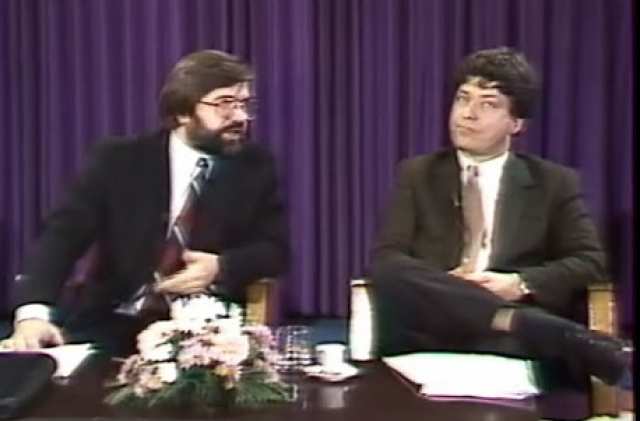
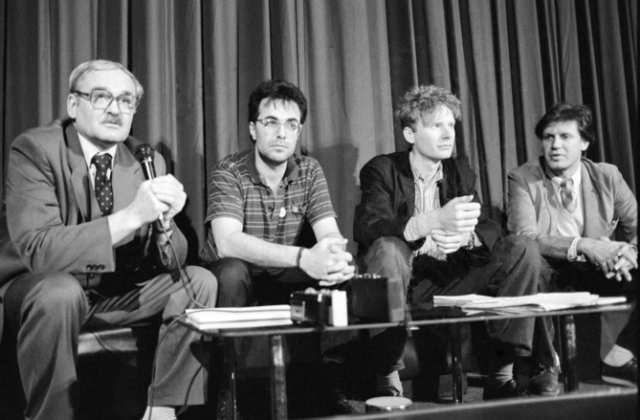
However, many had already demanded the withdrawal of Soviet troops before that. Historical memory has preserved Viktor Orbán’s speech at the reburial of Imre Nagy on June 16, 1989. This is no coincidence, as it was broadcast by Hungarian Television and became “the media event” of the regime change in Hungary. A few minutes earlier, Sándor Rácz had demanded the same thing. In fact, three months earlier, on March 15, 1989, opposition organizations had formulated a joint 12-point demand, which was read aloud by actor György Cserhalmi in front of the Hungarian Television headquarters. Point 9 read: “A neutral, independent Hungary. Withdraw Soviet troops from our country. Remove November 7 from the list of Hungarian holidays.” (This can be heard at 5 minutes 22 seconds in the linked video.) But if we dig even further back, in May 1988, the program entitled Van kiút (There is a Way Out) by the Network of Free Initiatives, the predecessor of the SZDSZ (Alliance of Free Democrats), also called for the withdrawal of Soviet troops as part of economic and political transformation. But what could only appear in samizdat at the time was already in the press among the demands of March 15, 1989, and was also voiced in front of large crowds in all major cities.
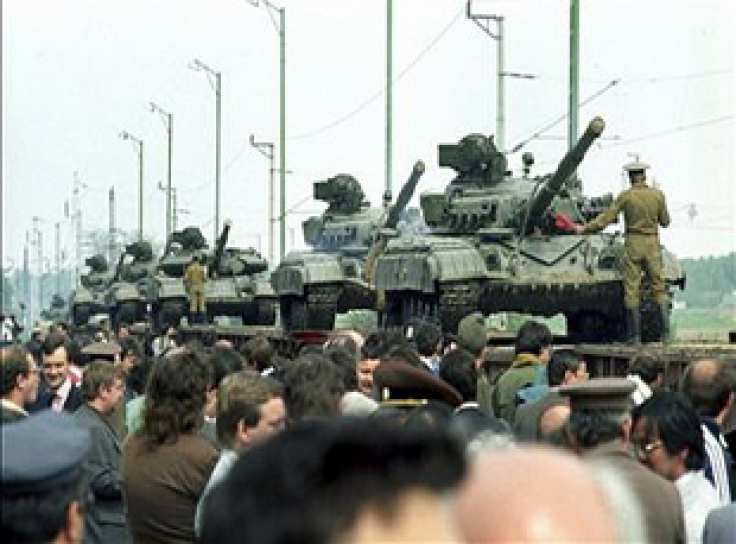
The agreement reached a year later, in March 1990, made the front pages of the newspapers, as did the fact that its implementation began immediately, on March 12. The first military train departed from the Hajmáskér railway station for the Soviet Union; the train crossed the Hungarian border on March 14, 1990. The arsenal to be dismantled and transported also included nuclear weapons: the Soviet Union stored nuclear warheads on a permanent basis near five towns – Kiskunlacháza, Kunmadaras, Császár, Nagyvázsony, and Tab – which could have been launched from mobile launchers (Scud).
The fifteen-month withdrawal took place without scandal but was fraught with controversy: no agreement had been reached on the financial terms of the withdrawal by the summer of 1991. The last Russian soldier, Lieutenant General Viktor Shilov, commander of the Southern Group of Forces, left Hungary by car at 3 p.m. on June 19, 1991, at the Tisza bridge near the village of Csap. Népszabadság, like other newspapers, reported on this and on the military farewell ceremony with a photo report. Several cities organized celebrations to mark the restoration of the country’s international sovereignty. The capital prepared a large-scale cultural event, primarily focused on music. The Budapest Búcsú festival, which was later held every year, was not limited to a single concert: it took place at several locations throughout the city from June 28 to 30, 1991. Among other places, it was held at the Margitsziget Pioneer Stadium, where the band Pa-dö-dö performed their hit song from the previous year, Bye-Bye Szása; in Tabán, where Frank Zappa was the star guest of the jazz-rock jamboree; and at the later permanent venue, Felvonulás Square, where a “rock and roll party” was held with the classic 1977 lineup of the Hungária band and a Moskvich car with “the last breath of communism” written in English on its exhaust pipe.
Common past: knowledge to dispel historical misconceptions – supporting the work of Slovak and Hungarian history teachers through print and online publications, professional conferences. A project of the Association of History Teachers and the Hungarian-language newspaper of the Denník N news portal.
Funded by the European Union. The information and statements contained herein are those of the author(s) and do not necessarily reflect the official views of the European Union or the Tempus Public Foundation. Neither the European Union nor the funding authority can be held responsible for them.