

Claim:
Numerous Hun archeological finds have been unearthed in the Carpathian basin written in Hungarian
Rebuttal:
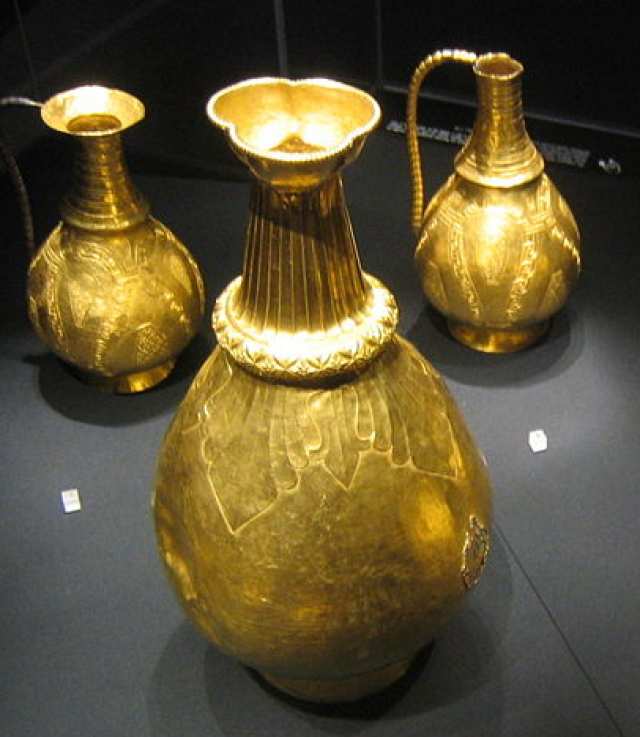
The ’treasure of Nagyszentmiklós’, also referred to as ’Hun finds’ were actually created in the 8th century and are connected to the Avars. We don’t yet know much about the language the Huns spoke because the language used by their leading tribe has very few surviving sources.
In detail:
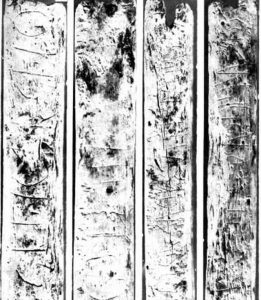
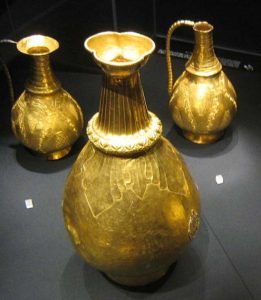
The Huns who lived in the Carpathian basin left behind no written sources, but it is often assumed about any archaeological find in the region that it comes from the Huns. One example is the set of 23 objects known as the ’Nagyszentmiklós treasure’, which is often attributed to the Huns and the writing on some of the objects is often referred to as ’Hun lettering’. Some of the inscriptions on the finds are in Greek, while others are written in an as yet unidentified and undeciphered script. However, archaeological arguments say that the find must be connected to the Avars rather than the Huns: they were owned by the family of an Avar chieftain in the 7th and 8th centuries. The same as yet undeciphered script is featured on the little pin box made of bone found near Szarvas among the finds of an Avar cemetery.
Very little is known about the language of the Huns, because contemporary reports only contain a handful of words and names, and even those only transcribed by speakers of other languages. What is certain is that the Hun tribal alliance was multilingual and as for the language of the leading tribe, opinions vary greatly. Many experts say that Attila’s tribe spoke a Chuvash-type Turkish language, others assume it was a close relative of the Saka language of Iran, yet others think it is possible that they spoke the Siberian language ket. (This language is spoken by the Khanty people along the Yenisei river, yet it doesn’t belong to the Finno-Ugric language family.)
Common past: knowledge to dispel historical misconceptions – supporting the work of Slovak and Hungarian history teachers through print and online publications, professional conferences. A project of the Association of History Teachers and the Hungarian-language newspaper of the Denník N news portal.
Funded by the European Union. The information and statements contained herein are those of the author(s) and do not necessarily reflect the official views of the European Union or the Tempus Public Foundation. Neither the European Union nor the funding authority can be held responsible for them.